
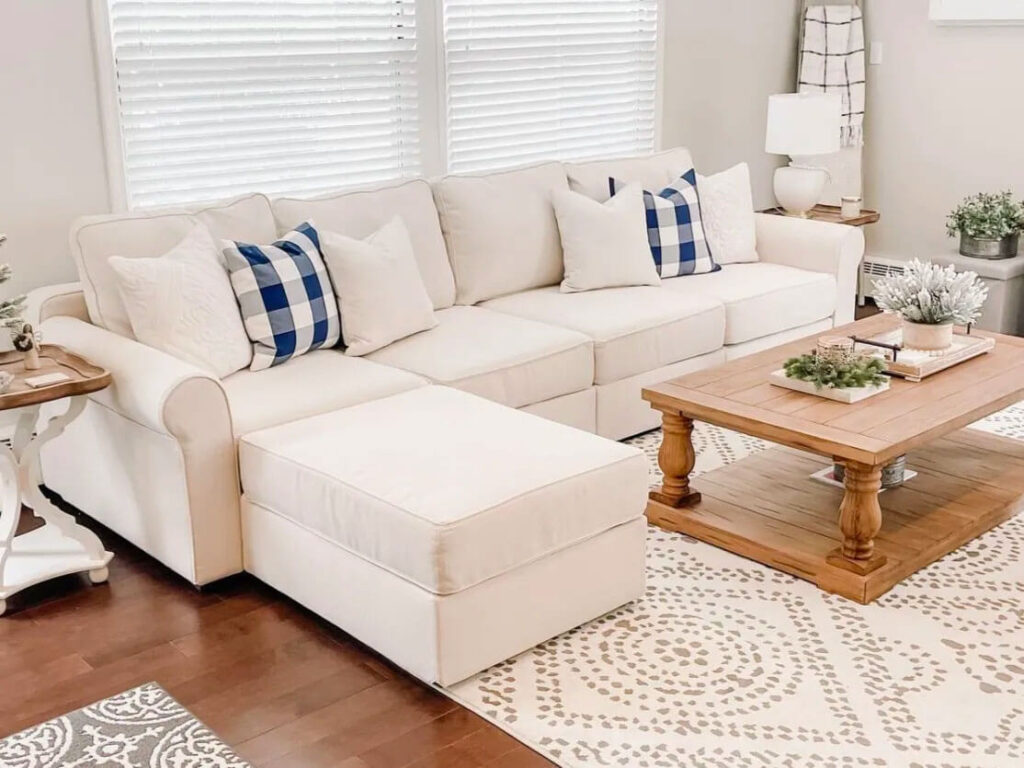
What Are Large Modular Sofas and Why Are They Popular?
Large modular sofas are space-saving furniture systems composed of individual sections that can be arranged and rearranged to create custom seating configurations. Unlike traditional sofas sold as single units, these pieces consist of separate components—corner seats, armless chairs, ottomans, and chaise lounges—that connect together to form cohesive seating arrangements.
The popularity of large modular sofas has surged in modern homes for several compelling reasons:
- Adaptability to changing lifestyles drives their appeal. Homeowners can reconfigure sections when moving to new spaces, accommodating guests, or simply refreshing their room’s layout without purchasing new furniture.
- Maximizing seating capacity becomes effortless with modular designs. A well-planned configuration can seat more people than traditional sofas while using the same floor space, making them ideal for families and those who frequently entertain.
- Contemporary aesthetics align perfectly with modern interior design trends. Clean lines, low profiles, and customizable upholstery options allow these sofas to complement minimalist, industrial, and contemporary decor styles.
- Urban living demands have accelerated adoption rates. As apartment sizes shrink and open-concept layouts become standard, the flexibility of large modular sofas addresses the need for furniture that serves multiple purposes without sacrificing style or comfort. Their ability to define zones within open spaces makes them particularly valuable in studio apartments and loft-style homes.
How Do Large Modular Sofas Maximize Space Efficiency?
Large modular sofas maximize space through their adaptable furniture design, allowing individual sections to be arranged in multiple configurations that match specific room dimensions. Unlike traditional fixed sofas, these pieces can transform from a straight layout to an L-shape, U-shape, or even a curved arrangement depending on your floor plan.
Common modular sofa configurations include:
- L-shaped arrangements that tuck perfectly into corners, freeing up central floor space for movement
- U-shaped setups that create intimate conversation areas while maximizing seating along three walls
- Straight sectionals that work along single walls in narrow rooms
- Chaise extensions that add lounging space without requiring separate furniture pieces
Each section typically measures between 30-40 inches wide, enabling precise customization to fit awkward spaces or unusual room shapes. A four-piece modular set can seat six to eight people while occupying the same footprint as a traditional sofa-plus-loveseat combination that only accommodates four.
The modular approach eliminates dead space between separate furniture pieces. Instead of gaps between a sofa and armchair, connected sections create one cohesive seating area. This seamless design means every square foot serves a purpose, particularly valuable in apartments or open-concept homes where efficient space utilization directly impacts livability.
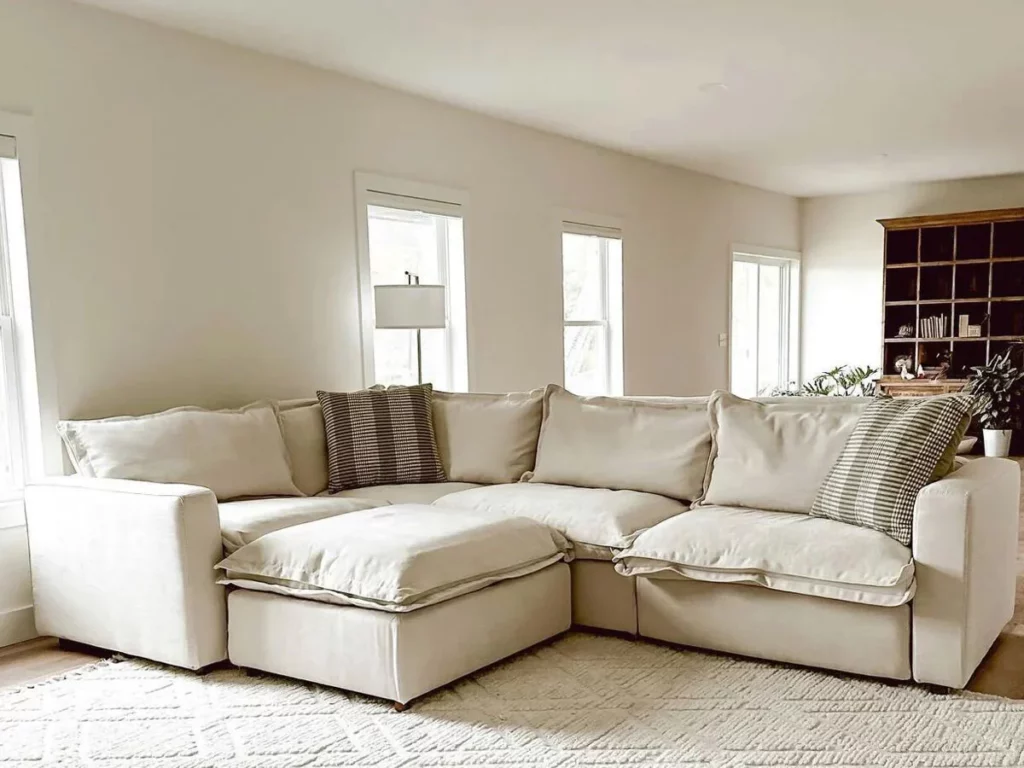
How Do Large Modular Sofas Enhance Versatility in Living Spaces?
Large modular sofas are versatile furniture that adapt to your lifestyle instead of forcing you to work around fixed seating arrangements. The individual sections can be separated and reconfigured within minutes, allowing you to transform your living room setup for different occasions—from intimate family movie nights to large gatherings where guests need more open floor space.
This adaptability goes beyond just rearranging the furniture. With customizable sofa arrangements, you can respond to changes in your life without having to buy new furniture. When you move to a different home, you can reassemble the same modular pieces to fit your new floor plan. If you have a new baby and need more space for play areas, you can temporarily reduce the size of the sofa by storing certain sections.
The ability of these sofas to define different areas is especially useful in open-concept homes. By placing an L-shaped configuration strategically, you can separate your living area from the dining space without needing walls or bulky room dividers. The back of the sofa naturally creates a visual boundary while still keeping the open feel of the layout.
Individual modules also have multiple uses throughout your home:
- Corner pieces can become standalone accent chairs in bedrooms
- Ottoman sections function as extra seating or coffee tables
- Armless units slide together to create guest sleeping arrangements
However, it’s essential to weigh the pro and con aspects of modular sofas before making a purchase decision.
Why Are Large Modular Sofas Considered a Stylish Choice for Modern Homes?
Stylish modular sofas offer extensive personalization through diverse fabric choices, colors, and design elements that align with contemporary interior aesthetics. Homeowners can select from materials ranging from luxurious velvet and durable linen to easy-clean performance fabrics, each contributing distinct visual and tactile qualities to the living space.
The customizable fabrics and styles available transform these sofas into statement pieces that reflect individual taste. Options include:
- Neutral tones like beige, gray, and cream for minimalist interiors
- Bold jewel tones such as emerald or navy for dramatic focal points
- Textured materials including bouclé and corduroy for added depth
- Leather or faux-leather finishes for sleek, modern sophistication
Current design trends heavily influence modular sofa aesthetics, with clean lines and low-profile silhouettes dominating contemporary collections. The mid-century modern revival has popularized tapered wooden legs and button-tufted cushions, while Scandinavian-inspired designs emphasize simplicity and functionality with rounded edges and light wood accents.
Space-Saving Style: Why Large Modular Sofas Are Worth the Investment becomes clear when considering how these pieces adapt to evolving design preferences. Manufacturers now offer modular systems with interchangeable covers, allowing homeowners to refresh their décor without replacing entire furniture sets. This design flexibility ensures the sofa remains visually relevant as interior trends shift, protecting the initial investment while maintaining a polished, curated appearance that elevates any modern home.
What Are the Long-Term Financial Benefits of Investing in Large Modular Sofas?
High-quality large modular sofas deliver substantial savings by eliminating the cycle of frequent furniture replacement. A well-constructed modular piece typically lasts 10-15 years compared to 3-5 years for budget alternatives, making it a cost-effective furniture investment that pays dividends over time.
1. Durability and Longevity
The durability of modular sofas stems from premium construction methods and materials:
- Hardwood frames resist warping and breaking
- Reinforced joints withstand daily use without loosening
- High-density foam cushions maintain their shape for years, avoiding sagging
2. Cost-Effective Repairs
Repair costs drop significantly with modular designs. Individual sections can be replaced or reupholstered without discarding the entire sofa. A damaged chaise or worn armrest becomes a targeted fix rather than a complete furniture overhaul.
3. Stain-Resistant Fabrics
Quality modular sofas often use stain-resistant, commercial-grade fabrics that handle spills and wear without showing damage. These materials reduce cleaning costs and preserve the sofa’s appearance through years of use.
4. Increased Property Value
Property value benefits emerge when homes feature durable, stylish furniture. Potential buyers recognize quality pieces that won’t require immediate replacement, viewing them as value-added features rather than items to discard.
How Can Choosing the Right Configuration Improve Room Functionality with Large Modular Sofas?
Selecting the appropriate configuration transforms a modular sofa from furniture into a functional room solution. L-shaped sofas work exceptionally well in square or rectangular rooms, fitting naturally into corners while creating distinct conversation areas. They maximize seating without consuming excessive floor space, making them ideal for apartments or family rooms where every square foot matters.
U-shaped sofas suit larger, open-plan spaces where you need to anchor a seating zone or create a natural boundary between living and dining areas. This configuration provides maximum seating capacity and encourages face-to-face interaction, perfect for households that frequently entertain guests.
Room Dimensions Matter
Room dimensions dictate which shape delivers optimal functionality:
- Narrow rooms benefit from straight or chaise configurations that follow wall lines
- Wide spaces accommodate U-shaped arrangements without blocking pathways
- Corner placements work best with L-shaped designs that utilize otherwise wasted angles
Consider Traffic Flow
Traffic flow requires careful consideration when positioning your modular sofa. Maintain at least 30-36 inches of clearance around major walkways to prevent bottlenecks. Measure doorways, hallways, and the intended placement area before committing to a configuration. A sofa that fits the room’s footprint but blocks access to balconies, windows, or other rooms creates daily frustration rather than functional living space.
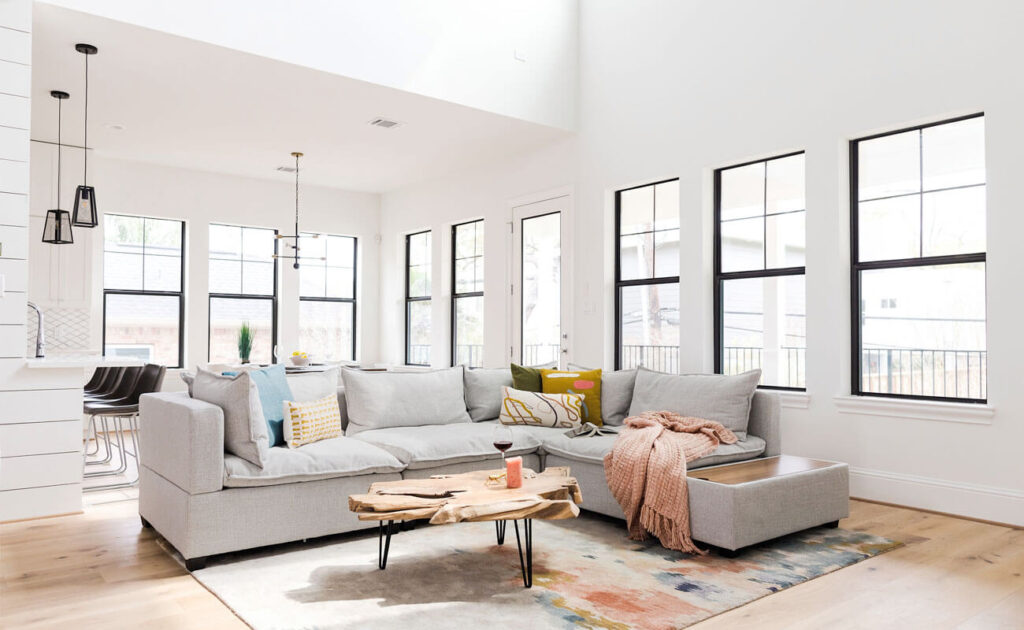
What Should Be Considered When Integrating Large Modular Sofas into Smaller Rooms?
Large modular sofas present unique challenges in compact spaces, primarily due to their substantial footprint that can quickly dominate limited square footage. The key concern involves visual weight—a bulky sectional may make a small room feel cramped and claustrophobic rather than cozy.
Small room furniture solutions require strategic planning before committing to a modular configuration:
- Measure twice, purchase once: Document exact room dimensions, including doorways, windows, and existing furniture placement
- Prioritize corner configurations: L-shaped arrangements tuck neatly against walls, maximizing floor space in the center
- Choose armless sections: Removing bulky armrests on connecting pieces reduces visual bulk by 12-18 inches
- Opt for raised legs: Visible floor space beneath the sofa creates an airy feeling, preventing the furniture from appearing grounded and heavy
- Select lighter upholstery colors: Pale neutrals reflect light and recede visually, making the sofa feel less imposing
Wall-hugging designs prove particularly effective for Space-Saving Style: Why Large Modular Sofas Are Worth the Investment in tight quarters. A two-piece sectional positioned flush against adjacent walls eliminates wasted corner space while maintaining clear pathways. Some manufacturers offer compact-depth models (32-34 inches instead of standard 38-40 inches) specifically engineered for smaller footprints without sacrificing seating comfort.
Testing configurations with painter’s tape on the floor before delivery prevents costly mistakes and ensures adequate circulation space remains around the furniture.
Are Large Modular Sofas Worth the Investment for Space-Saving Style?
Investing in modular sofas delivers measurable returns through their unique combination of adaptability and enduring design. These pieces transform with your lifestyle—hosting guests one week, creating intimate family spaces the next—while maintaining their structural integrity for years.
The financial logic becomes clear when comparing replacement cycles. A quality modular system lasts 10-15 years versus 5-7 for traditional sofas, reducing long-term furniture costs by nearly half. Their reconfigurable nature means they move seamlessly between homes and room layouts without becoming obsolete.
Space-saving style meets practical functionality in ways fixed furniture cannot match. Modular sections maximize seating capacity within existing square footage while offering the aesthetic flexibility to refresh your interior design through simple rearrangement rather than expensive replacements.
Related : Add Luxury to Small Spaces with Designer 2 Seater Sofas